artemis logo

Protect against fraud

Please be aware that Artemis will never attempt to market or sell to you via WhatsApp

Find out more

Protect against fraud: Please be aware that Artemis will never attempt to market or sell to you via WhatsApp

Find out more

Marketing communication. Capital at risk. 

SmartGARP®

Profit potential at a reasonable price

While the mechanics of SmartGARP are clever, its purpose is simple: it searches for and pinpoints profit potential in vast and dense terrains.

The combination of our powerful stock screening tool and human intelligence ensures the profit hunt is both efficient and effective

What is SmartGARP?

SmartGARP is a powerful stock screening tool. From a universe of approximately 6,000 global companies, SmartGARP aims to pinpoint companies that are growing faster than the market but trading on lower valuations than the market. These companies should be enjoying strong and consistent upgrades to profits forecasts and be under-owned by investors while also benefiting form helpful macroeconomic trends. In other words, 'growth at a reasonable price' (GARP).

Why does valuation matter?

If two companies are on similar valuations, the company with the faster growth will probably deliver better returns. In a similar fashion, for two companies with similar growth rates the lower-valued stock will probably deliver higher returns. Likewise, a stock with persistent upgrades to profit forecasts would tend to outperform one with persistent downgrades.

What SmartGARP does is simply put all of these insights together, using thousands of data points available on stocks, to help us build a portfolio of companies that tend to be on low valuations with above-market growth and which are experiencing upgrades to their forecasts. Almost by definition they won't be consensus names, but the fundamentals point to them having a good chance of delivering outsized returns.

Our SmartGARP fund range

Risk warning and source: Past performance is not a guide to the future. Your capital is at risk. Source: Lipper Limited. All figures show total returns with dividends and/or income reinvested, net of all charges. Performance does not take account of any costs incurred when investors buy or sell the fund. Returns may vary as a result of currency fluctuations if the investor's currency is different to that of the class. Artemis SmartGARP European Equity Fund: Class I accumulation units, GBP from 7 March 2001 to ; Data prior to 7 March 2008 reflects class R accumulation GBP. Benchmark is FTSE World Europe ex UK Index and sector is IA Europe Excluding UK. Artemis SmartGARP Global Equity Fund: Class I accumulation units, GBP from 9 September 2002 to ; Data prior to 7 March 2008 reflects class R accumulation GBP. Benchmark is MSCI AC World Index and sector is IA Global. Artemis SmartGARP UK Equity Fund: Class I accumulation units, GBP from 9 September 2002 to ; Data prior to 1 September 2010 reflects class R accumulation GBP. Benchmark is FTSE All-Share TR and sector is IA UK All Companies. Artemis SmartGARP Global Emerging Markets Equity Fund: Class I accumulation shares, GBP from 8 April 2015 to . Benchmark is MSCI EM (Emerging Markets) Index and sector is IA Global Emerging Markets.

Fund and manager awards

Our strong SmartGARP fund performance has led to us winning a number of independently judged awards
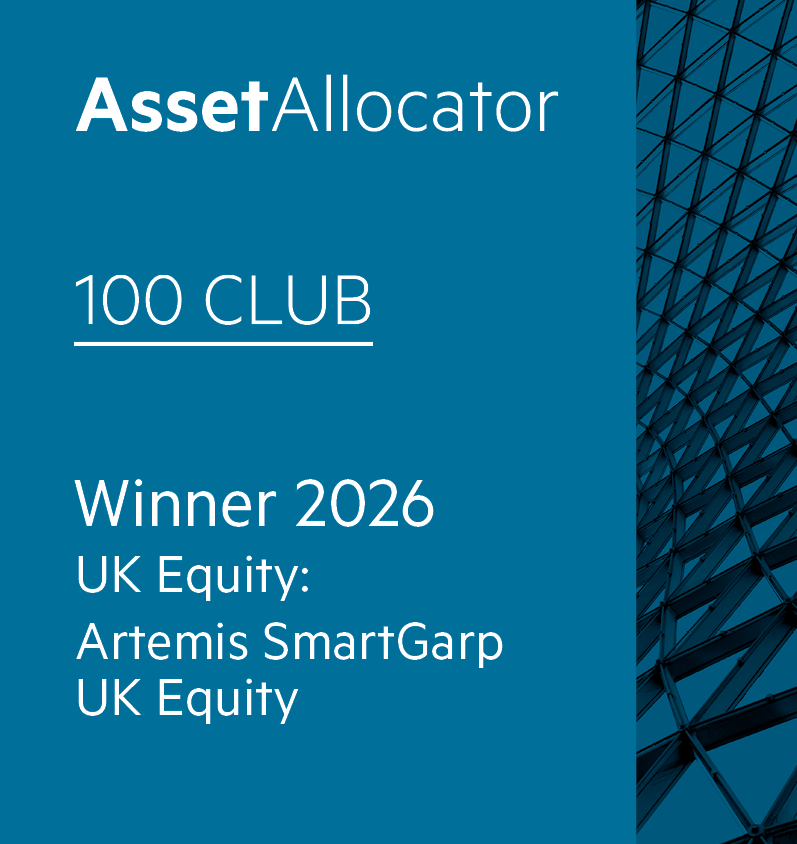
award1award2award3

SmartGARP explained

In this short video, find out how the SmartGARP screening and portfolio construction process works.

Hear from the investment team

The investment team discuss five key elements of SmartGARP: the tool, process, team, funds and track record
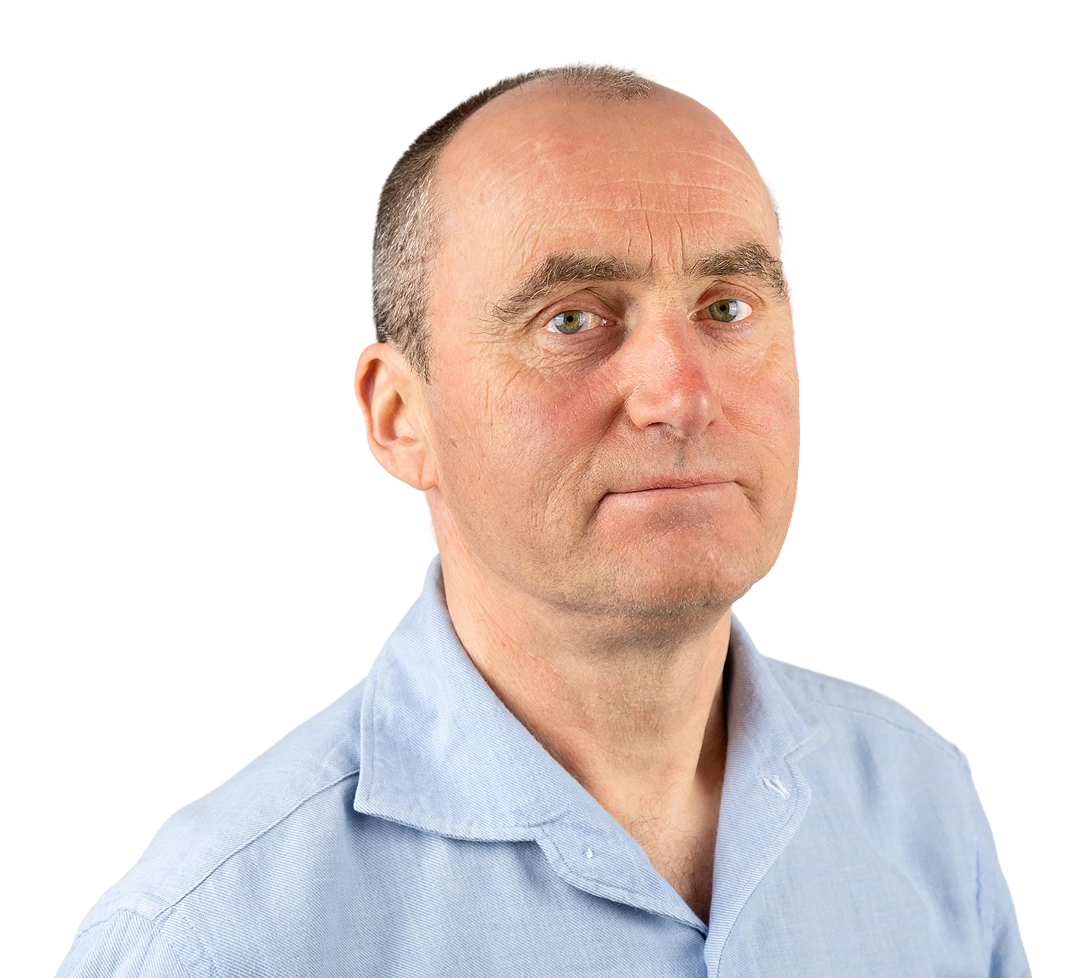
In creating SmartGARP in the early 1990s the intention was to put together a process for picking stocks that was more grounded in evidence and data to help investors make money.

In 2001 I brought this to Artemis, to run money the way I think it should, and the result has been a process that is scalable, repeatable, and has a demonstrable track record."

Philip Wolstencroft

SmartGARP founder and fund manager

How does the tool identify stocks with 'GARP' characteristics?

The SmartGARP process scores stocks between 1-100 across eight different factors. The higher the score, the better the stock screens. The top quintile is reviewed by the fund manager for consideration for inclusion in a portfolio.

Top-down

Looks at changes in current and forecast measures such as GDP growth, inflation, bond yields, interest rates, yield curves, commodities and oil prices.

A sector level factor which seeks to evaluate how the broad investor community is positioned in their portfolios

Bottom-up

The expected return of any financial asset is a function of its current valuation and the future growth rate of its cashflows. So these factors lie at the heart of the SmartGARP model. They highlight companies that are showing earnings growth above market levels while trading at attractive valuations.

Considers measures such as changes to earnings forecasts, forecasts adjusted by dispersion, changes in highest/lowest earnings estimates and earnings up and down grades.

Looks at the stock price movement, including price momentum, price movements over results days and changes in broker recommendations.

We look for companies with strong ESG credentials and/or those that are showing significant improvements

Combines a series of measures to assess the degree to which companies make use of accounting standards to enhance reported results.

SmartGARP team

Philip Wolstencroft

Philip Wolstencroft

Fund manager

Aalok Sathe

Aalok Sathe

Analyst

Harry Eastwood

Harry Eastwood

Analyst

Harry Eastwood

Analyst

Laura Corbetta

Laura Corbetta

Analyst

Laura Corbetta

Analyst

Webinars

Why the emerging markets revival has only just begun

Watch all webinars
Raheel Altaf

Raheel Altaf

While valuations remain a key attraction of emerging markets, fund manager Raheel Altaf will discuss the improving fundamentals and long-term structural trends that further enhance their attractiveness for investors.

Watch 10 Mar 2026
Watch all webinars

Frequently asked questions

We answer clients' most common questions about SmartGARP

The investment process was developed by Philip Wolstencroft during his time working as an equity strategist at Merrill Lynch. He developed it in an attempt to distil what all active fund managers do, but in a more systematic way and to remove the behavioural biases he often observed from fund managers in his role as a strategist. It was based on the belief that inefficiencies exist in global stock markets because investors do not always act rationally. SmartGARP seeks to address this by using data to be more objective, rigorous and systematic in the analysis of companies’ financial characteristics and in decision-making.

The first fund to use the process was the Artemis SmartGARP European Equity Fund, launched when Philip joined Artemis in 2001. The process has been developed and refined ever since.

From a universe of approximately 6,000 global companies – with minimum levels for market cap (US$500mn), liquidity and analyst coverage applied – SmartGARP aims to identify companies that are growing faster than the market but are trading on lower valuations than the market. They should be enjoying strong and consistent upgrades to profit forecasts and be under-owned by the investment community, while at the same time benefiting from helpful macroeconomic trends. In other words, ‘growth at a reasonable price’ (GARP).

We believe that share prices ultimately follow fundamentals. To illustrate this, we look at ‘value per share’ (VPS) as an aggregate measure of a stock’s fundamentals. VPS is a combined measure of earnings, cash flow, operating profits, dividends and asset value per share. Divergences between the share price and the VPS can signal an opportunity or a risk.

In the long-term, we believe the two are highly correlated and held together by an elastic band. Divergences can occur between the two, but usually these will snap back and correct. At times, share prices can overshoot the performance of the business. This is often down to over-optimism about future growth prospects or a lack of account for risks to growth.

The SmartGARP tool uses eight different measures to analyse stocks within a given universe:

Top-down factors

Macro
Investor sentiment and ownership

Bottom-up factors

Growth and Value
Estimate revisions
Momentum
ESG factors
Accruals

See above for more detailed explanations of each one. 

Each factor is given equal weighting apart from ‘estimate revisions’ which is double weighted. This is because the team view earnings upgrades as the strongest and most reliable indicator of an improving share price.

The value factor varies between being half weighted and double weighted to reflect the dispersion of valuations and the recent performance of value investing.

There are over 6,000 stocks in the investible universe. We rank every company on eight factors and, then rank them against the universe to give them an overall ‘SmartGARP score’ out of 100. Companies with a score above 80 are considered for inclusion in the fund. The fund managers then carry out due diligence on these stocks. This is to identify non-operational issues (such as accounting changes, acquisitions or disposals etc.) that may be skewing the data. The fund manager then builds a diversified portfolio according to the stock and sector limits of the strategy.

No. SmartGARP is an evidence-based approach to investing, incorporating well understood and accepted investment principles, but deployed in a systematic fashion. It mimics how most fundamental investors would think about things but avoids many of the biases that traditional managers can suffer from.

In client meetings, we regularly demo the tool to provide transparency and help explain how the fund managers interact with the system to make decisions.

We consider the process to be 80% systematic, 20% fund manager overlay. After running the screening tool, the fund managers carry out due diligence on the stocks that score highly. This is to identify non-operational issues (such as accounting changes, acquisitions or disposals etc.) that may be skewing the data.

This is strictly a validation exercise to ensure that the financial data is a complete and accurate reflection of the underlying characteristics of a company. The fund manager is not looking to gain detailed insights of the company’s business or meet its management which might compromise the investment process by introducing subjectivity and behavioural bias.

The other element driven by the managers is the timing of investment decisions.

At times of severe market distress, such as the start of the Covid pandemic, the fund manager overlay plays a bigger role.

The screening tool is run daily.

The fund manager monitors the SmartGARP score, watching for persistent degradation. Typically, as the score fades towards 50 the manager will be trimming and reallocating to higher scoring companies. As the score falls below 50, that is typically a signal to sell the position. Trading activity is elevated around earnings season given this is when newsflow around a company’s fundamentals is at its highest.

SmartGARP works in most market conditions apart from times of extreme stress, such as the Global Financial Crisis or Covid. The volatility skews data in the short term, as the tool normally focuses on identifying long-term patterns. At this point the human element of the process plays a bigger role.

Five Artemis funds use the SmartGARP process: Global, Global Smaller Companies, European, UK and Global Emerging Markets.

SmartGARP works in any market, as is evidenced by the global fund, which invests in all regions. The tool works particularly well in under-researched areas, such as emerging markets and medium-sized companies (‘mid caps’) across all markets.

Over recent years it has worked less well in the US which has a great deal of analyst coverage and has recently been a highly concentrated market.

The tool has developed slowly and in a considered fashion to include new data and new data-capture techniques available.

The most recent substantive change was when the ESG factor was added in 2018. Other changes have been more incremental. The team constantly tests sources of data, but the core of the process remains largely unchanged.

The team’s dedicated quantitative IT developer focuses on data architecture design and facilitates in the testing of new and existing datasets.

SmartGARP’s style bias has shifted through time. It is currently biased towards value, because that is where it is seeing opportunities. However, given the process incorporates a range of factors, you should also expect to see within the holdings, positive revisions, as well as good growth and quality characteristics.

We do not have hard limits on factor tilts. But we monitor them and style tilts (e.g. towards growth, value, revisions, top down etc) which should not be negative for any significant length of time.

On a quarterly basis we have formal risk reviews with our independent Investment Risk Team. In these meetings, we cover a range of topics around portfolio positioning, trading decisions, attribution, and outlook.

Given the nature of the tool, the funds have a high active share and look different to the peer group. This is because the tool casts the net wider than even a large team of analysts could, uncovering opportunities that others may miss.

The tool screens the universe to direct the managers towards the best ideas. This means a large team of analysts is not necessary.

The tool is a powerful and efficient method of screening a large universe of stocks and focusing the fund managers attention on the best ideas according to SmartGARP. Time is not spent conducting deep fundamental research, meeting management, or managing a large pool of analysts.

In addition, a small team has its advantages; short lines of communication, quick decision making, and ownership of the outcome engenders positive outcomes.

Contact Us

Our London head office:

Tel: 0800 092 2051

Artemis Investment Management

Cassini House

57 St James's Street

London SW1A 1LD

Capital at risk

All financial investments involve taking risk which means investors may not get back the amount initially invested. To ensure you understand whether a fund is suitable for you, please refer to the fund’s prospectus (or in the case of investment trusts, Investor Disclosure Document and Articles of Association), and KIID/KID, available in English and in your local language depending on local country registration, available in the literature library.