Artemis Global Select Fund
Q3 2025 update

Source for all information: Artemis as at 30 September 2025, unless otherwise stated.
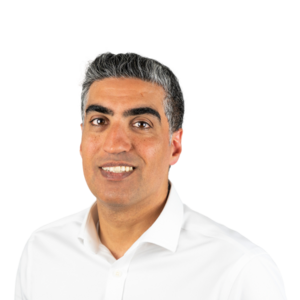
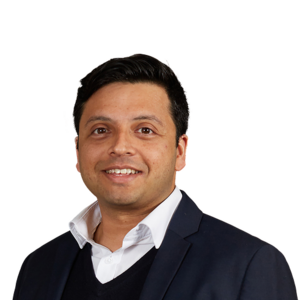
From 6 October, the Artemis Global Select Fund will be renamed the Artemis SmartGARP Global Smaller Companies Fund. The new strategy will be managed by Raheel Altaf, with support from analyst Aalok Sathe.
Review of the quarter to 30 September 2025
Over the past three months, global equities have built on the recovery momentum from the second quarter following the shock of the tariffs announced on ‘Liberation Day’. They have now delivered five consecutive months of positive returns.
Cyclicals continued to lead global equities to record highs. IT was the best performing sector over the quarter, rallying 15% in sterling terms as investors clambered for more exposure to beneficiaries of AI capex spend. Traditionally defensive sectors such as healthcare and consumer staples lagged.
AI investor enthusiasm broadened out from the US to encompass other regions, namely in emerging markets, which returned 12.6% over the quarter. China rallied 23% as investors appeared to drop the ‘uninvestable’ tag and refocused on the technological advancements the country is making in areas such as AI.
In addition, a backdrop of interest rate cuts, including the first by the Federal Reserve this year, has helped buoy investor sentiment.
During the three-month period, the Artemis Global Select Fund returned 7.8%, compared with 9.5% from its MSCI AC World index benchmark and 6.8% from its IA Global peer group.
| Three months | Six months | One year | Three years | Five years | |
| Artemis Global Select | 7.8% | 12.3% | 6.6% | 28.4% | 40.8% |
| MSCI AC World NR GBP | 9.5% | 15.1% | 16.8% | 54.8% | 81.2% |
| IA Global NR | 6.8% | 12.4% | 11.0% | 38.8% | 56.7% |
Past performance is not a guide to the future. Source: Lipper Limited to 30 September 2025 for class I Acc GBP. All figures show total returns with dividends and/or income reinvested, net of all charges. Performance does not take account of any costs incurred when investors buy or sell the fund. Returns may vary as a result of currency fluctuations if the investor’s currency is different to that of the class. Classes may have charges or a hedging approach different from those in the IA sector benchmark.
Detractors
Two of the biggest detractors from performance were stocks we either don’t own (Alphabet) or where we are underweight (Apple).
Alphabet rallied after the Department of Justice unexpectedly ruled that Google would not have to sell its Chrome web browser in its ongoing antitrust case. However, our long-term thesis remains that Alphabet will be an AI loser. Competition from AI will likely dilute Google’s search advantage and hence we did not reduce an underweight position relative to the benchmark.
Apple rallied after it committed to a $100bn investment to build out its US manufacturing programme. Again, this announcement does not change our long-term negative thesis, which is partly based on eroding returns if Apple has to become an asset-heavy hardware business with reshored US manufacturing. We remain underweight.
Contributors
The long-term structural story of growing travel demand in China, market share gains and operational leverage were reflected in Trip.com’s results, with short-term fears concerning heightened competition and excess spending on overseas expansion fading somewhat. This reaffirmed our investment thesis.
Technology conglomerate Tencent delivered strong results, beating expectations on both the gaming and advertising sides of the business. More generally, investors have come to appreciate Tencent’s global lead in AI applications, which benefit the company both internally (better gaming output and greater return on investment and ad tech) and externally via its enterprise cloud it can offer to clients.
Purchases
We bought Contemporary Amperex Technology (CATL), the world’s largest manufacturer of lithium-ion batteries. Increasing use of its batteries in electric vehicles (EVs) and large-scale energy storage have been driving the Chinese company’s recent growth. CATL supplies batteries to nine out of the top 10 EV automakers globally including Tesla and BMW, as well as to domestic Chinese automakers where it has a dominant market position.
Our investment case rests on four key aspects:
- Battery manufacturing is a scale and innovation game – mass manufacturing at scale is what Asia tends to do best. CATL has shown it can innovate to stay ahead of the game. It partners with a limited number of automakers and subsequently its scale and vertical integration allow it to produce every iteration of technology at the lowest cost. Few competitors have been able to keep up with the flywheel of innovating and scaling to drive down costs.
- Fast growing end-demand segments – CATL’s main revenue-generating sectors of EVs and energy-storage solutions (ESS) are underpenetrated markets and growing quickly as electrification demand continues to grow.
- Stable unit profitability – despite large fluctuations in raw material prices, innovation has allowed CATL to cut prices most years and it has been able to pass these benefits on to customers (battery prices have more than halved in China over the past three years) while maintaining unit profitability.
- Strong balance sheet and positive cashflow generation – the company has just completed a large capital expenditure phase, building new factories in regions including Europe. In terms of valuation, assuming lower-than-consensus revenue growth of 15% per annum until 2027 and stable margins, with an unchallenging target multiple of 12x EV/EBITDA, we still get a target price that offers the potential for a 56% total return over the next three years.
Given the competitive advantages around the business and secular end-demand growth, CATL could surprise on the upside and the market may be prepared to pay a higher multiple for its growth.
We also bought Italian bank UniCredit which has exposure to several attractive economies across Europe, including Germany, where we expect to see looser fiscal policy feed through to better revenue growth opportunities. There is M&A upside potential given its balance sheet size, increased EU desire to push a banking union and proven ability to generate accretive returns.
Sales
We exited food-delivery provider Meituan as heightened competition in the instant delivery space in China and increased investment in international expansion may put margins at risk in the near term. Meituan should be a long-term winner, but short-term investments and competition may weigh on the next few quarters of results.
Danish pharmaceutical Novo Nordisk also left the portfolio. We sold out before the profit warning on concerns regarding the distribution strategy in the US, the earlier resignation of its chief executive, consumer preference for Eli Lilly’s weight-loss drugs and worries about the incremental drug-pricing policy in the US. The proceeds were used to add to recent new position Sandoz where there is greater visibility in EPS (earnings per share) growth and a simpler investment case.
Notes and references
CAPITAL AT RISK. All financial investments involve taking risk and the value of your investment may go down as well as up. This means your investment is not guaranteed and you may not get back as much as you put in. Any income from the investment is also likely to vary and cannot be guaranteed.
This is a marketing communication. Before making any final investment decisions, and to understand the investment risks involved, refer to the fund prospectus (or in the case of investment trusts, Investor Disclosure Document and Articles of Association), available in English, and KIID/KID, available in English and in your local language depending on local country registration, available in the literature library.

Risks specific to Artemis SmartGARP Global Smaller Companies Fund
- Market volatility risk The value of the fund and any income from it can fall or rise because of movements in stockmarkets, currencies and interest rates, each of which can move irrationally and be affected unpredictably by diverse factors, including political and economic events.
- Currency risk The fund’s assets may be priced in currencies other than the fund base currency. Changes in currency exchange rates can therefore affect the fund's value.
- Charges from capital risk Where charges are taken wholly or partly out of a fund's capital, distributable income may be increased at the expense of capital, which may constrain or erode capital growth.
- Emerging markets risk Compared to more established economies, investments in emerging markets may be subject to greater volatility due to differences in generally accepted accounting principles, less governed standards or from economic or political instability. Under certain market conditions assets may be difficult to sell.
- Smaller companies risk Investing in small companies can involve more risk than investing in larger, more established companies. Shares in smaller companies may not be as easy to sell, which can cause difficulty in valuing those shares.
The intention of Artemis’ ‘investment insights’ articles is to present objective news, information, data and guidance on finance topics drawn from a diverse collection of sources. Content is not intended to provide tax, legal, insurance or investment advice and should not be construed as an offer to sell, a solicitation of an offer to buy, or a recommendation for any security or investment by Artemis or any third-party. Potential investors should consider the need for independent financial advice. Any research or analysis has been procured by Artemis for its own use and may be acted on in that connection. The contents of articles are based on sources of information believed to be reliable; however, save to the extent required by applicable law or regulations, no guarantee, warranty or representation is given as to its accuracy or completeness. Any forward-looking statements are based on Artemis’ current opinions, expectations and projections. Articles are provided to you only incidentally, and any opinions expressed are subject to change without notice. The source for all data is Artemis, unless stated otherwise. The value of an investment, and any income from it, can fall as well as rise as a result of market and currency fluctuations and you may not get back the amount originally invested.