
Why it’s hard to look beyond short-dated bonds for fixed income


Key takeaways
- A huge uptick in supply and an aggressive hiking regime harmed government bonds’ status as a safe-haven asset post-Covid.
- The move from a ‘scary’ to ‘sticky’ inflation regime means the outlook for longer-dated bonds has improved.
- Despite spread compression, investors in short-dated bonds are being compensated in real terms at a level not seen for more than a decade.
- With an equal share of hikes and interest rate cuts expected across developed markets this year, an active approach to fixed income is key
Investors instinctively gravitate towards traditional safe havens during periods of stress. Classic ‘risk off’ assets such as sovereign bonds, reserve currencies and gold typically offer ballast to portfolios when uncertainty rises.
Yet the post-Covid experience challenged historical norms. Yes, gold has reasserted its appeal as a store of value and been a clear winner, especially over the past year. But elevated inflation, aggressive and unconventional monetary and fiscal policy along with sharp shifts in real interest rates have eroded the protective qualities of some havens, particularly government and long-duration bonds.
Are safe-haven assets redundant?
For the most part, asset markets have been so resilient to shocks in recent years that an investor buying the MSCI World or some other global index hasn’t needed a haven…
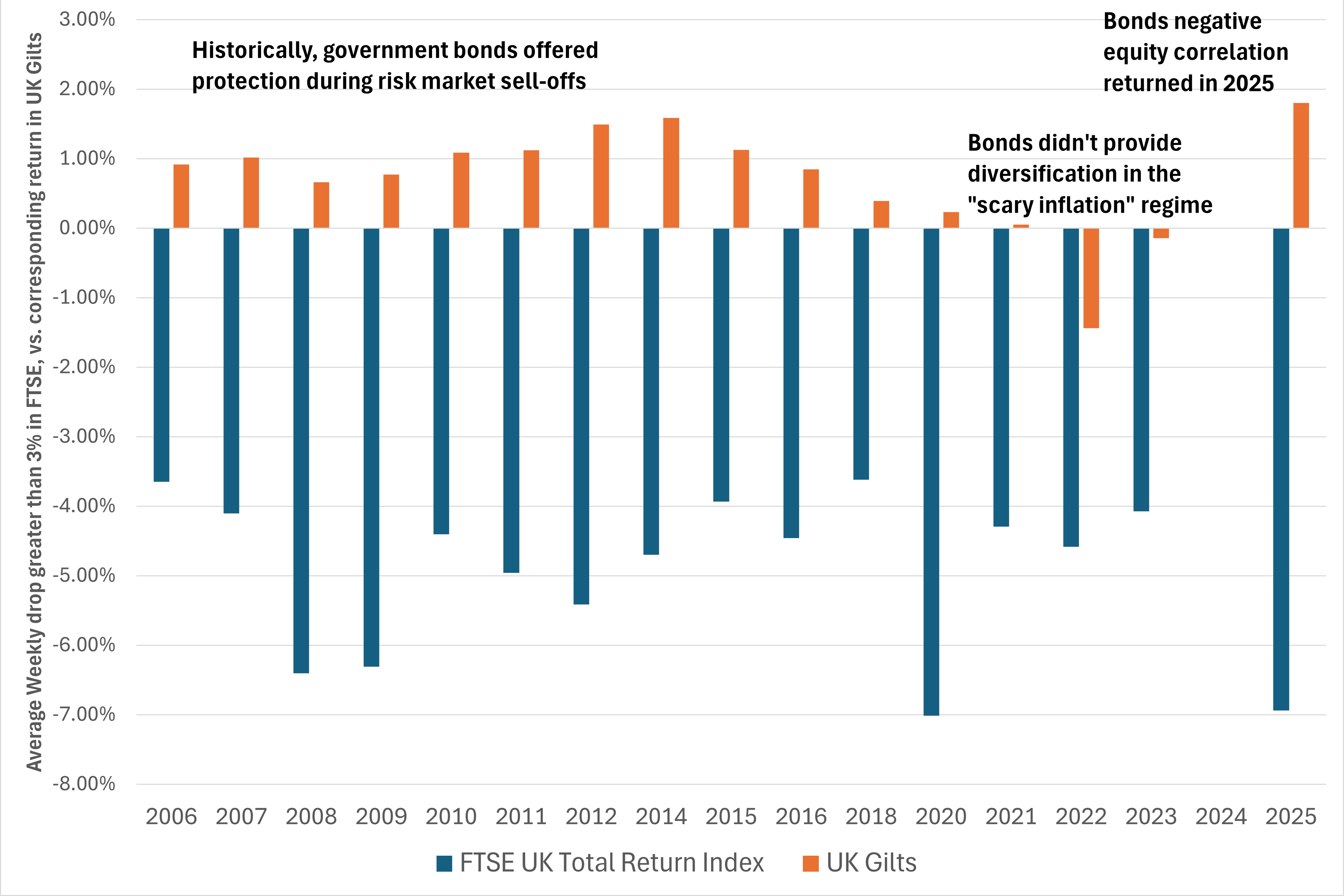
Safe-haven bonds
Source: Bloomberg
The post-Covid regime created two significant shifts that affected the classic inverse relationship between equities and fixed income – a huge uptick in government bond supply and an aggressive hiking regime necessitated by a surge in inflation.
While we seem to be over the worst of the latter shock (albeit we remain in a stickier inflation regime), the deluge in government bond supply is likely to remain as governments around the world ramp up spending.
Attractive valuations in shorter-dated bonds
I am comfortable that now we have transitioned from the ‘scary’ to the ‘sticky’ inflation regime, longer-dated bonds can regain some of their poise in risk-off periods.
However, while fiscal policy continues to run hot, the leap of faith required to forego still attractive valuations in shorter-dated fixed income is a leap too far, in my view…
I say this even though the outlook for interest rates is more balanced this year.
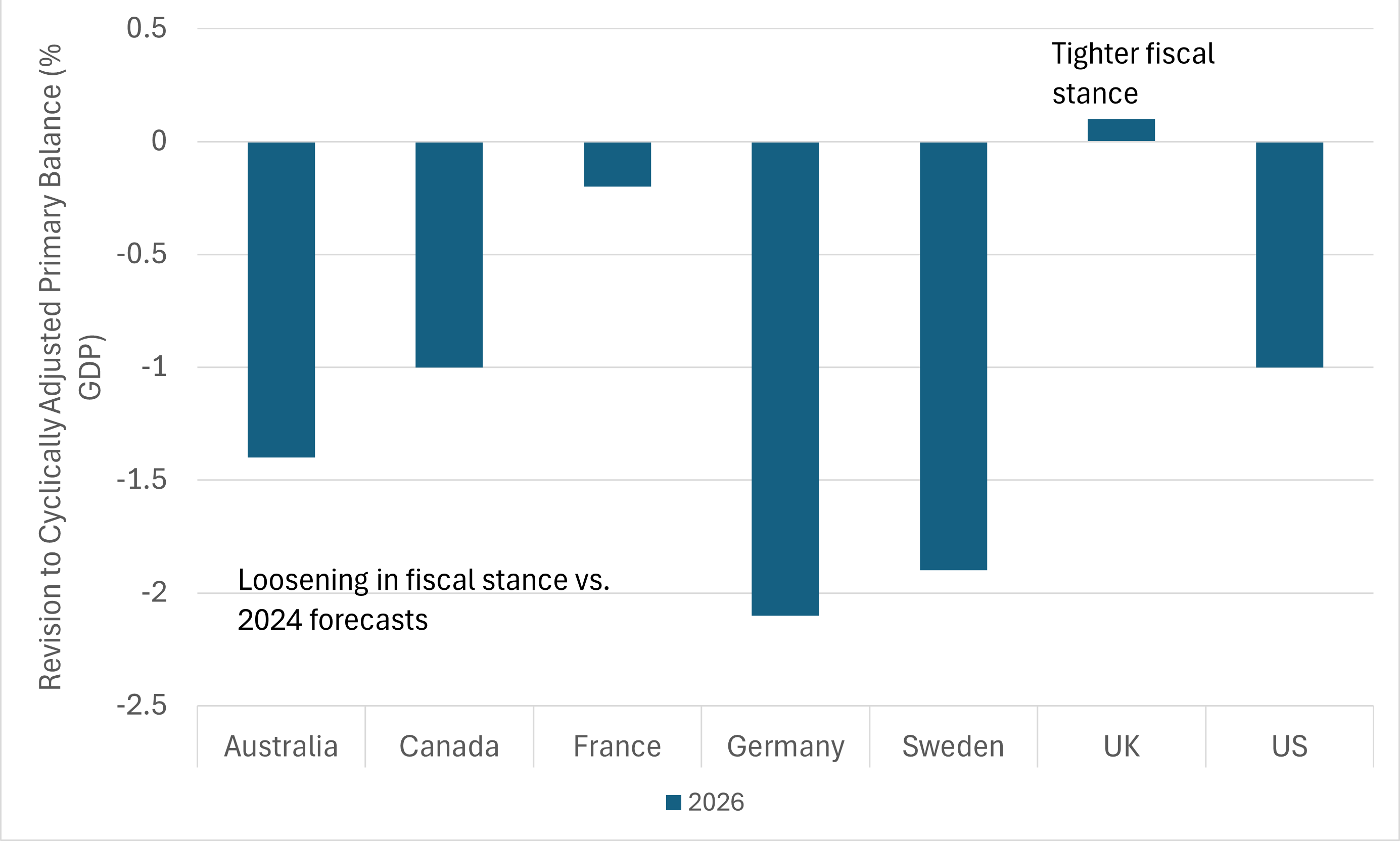
Cyclically Adjusted Primary Balance for 2026 - Successive IMF forecasts
Source: The IMF
Only the most bearish commentator would discount what looks like a broad-based global reacceleration in economic output across the G10. Certainly 2026 should at least see an equal share of hikes as well as interest rate cuts across developed markets. In this regime, an active approach to fixed income management is key.
The deluge in government bond supply is likely to remain as governments around the world ramp up spending.
We can look to Japan (the central bank of which is clearly behind the curve) and markets such as Australia/New Zealand as countries most likely to hike rates, whereas the UK (out of necessity) and the US (out of political interference) should see a continuation of easing cycles into the end of this year.
Higher interest rates mean higher yields
So why do I continue to prefer short-dated fixed income? Despite spread compression, investors are being compensated in real terms at a level not seen for the past decade.
Simply put, a higher-for-longer environment means investors earn higher yields. In the front end of the curve, investors are compensated with above-cash and inflation-beating returns.
While fiscal policy continues to run hot, the leap of faith required to forego still attractive valuations in shorter-dated fixed income is a leap too far.
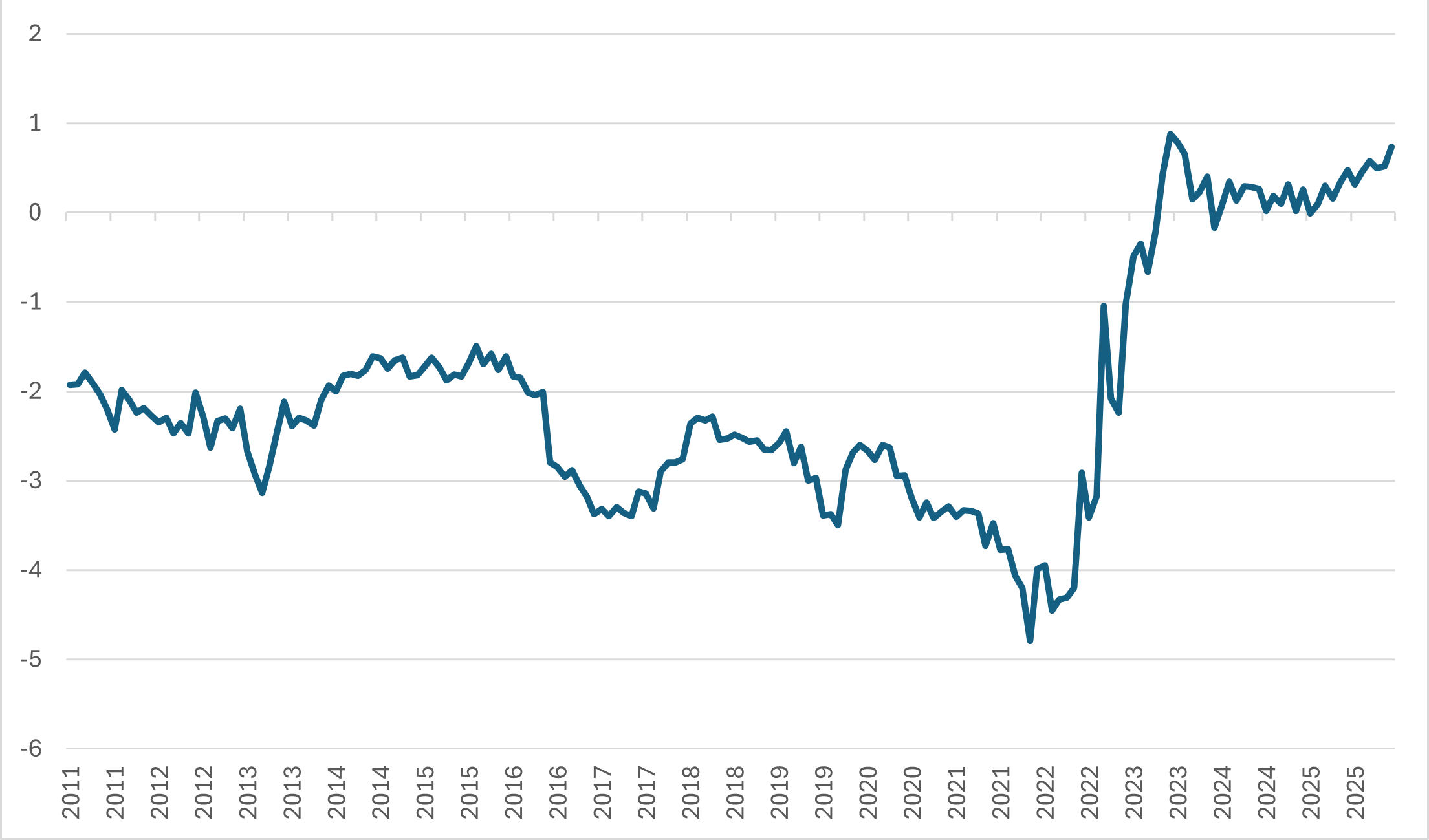
Just look at the real return available on short-dated UK government bonds (which I expect to benefit from more interest rate cuts this year). Having been significantly negative for an extended period, investors are now compensated in real terms.
3Y UK Real Yields
Source: Bloomberg
In the front end of the curve, investors are compensated with above-cash and inflation-beating returns.
For the Artemis Short Duration Strategic Bond Fund, our primary area of focus is short-dated UK investment grade bonds – so the yield available is even more attractive for investors.
Add in our ability to pick out high-quality short-dated high-yield securities and the proposition becomes even more compelling. So, while valuations have certainly become more compelling for longer-dated bonds, short-dated fixed income is still the sweet spot in my view.
FOR PROFESSIONAL INVESTORS AND/OR QUALIFIED INVESTORS AND/OR FINANCIAL INTERMEDIARIES ONLY. NOT FOR USE WITH OR BY PRIVATE INVESTORS.
CAPITAL AT RISK. All financial investments involve taking risk and the value of your investment may go down as well as up. This means your investment is not guaranteed and you may not get back as much as you put in. Any income from the investment is also likely to vary and cannot be guaranteed.
This is a marketing communication. Before making any final investment decisions, and to understand the investment risks involved, refer to the fund prospectus (or in the case of investment trusts, Investor Disclosure Document and Articles of Association), available in English, and KIID/KID, available in English and in your local language depending on local country registration, available in the literature library.
Risks specific to Artemis Short-Duration Strategic Bond Fund
- Market volatility risk The value of the fund and any income from it can fall or rise because of movements in stockmarkets, currencies and interest rates, each of which can move irrationally and be affected unpredictably by diverse factors, including political and economic events.
- Currency risk The fund’s assets may be priced in currencies other than the fund base currency. Changes in currency exchange rates can therefore affect the fund's value.
- Bond liquidity risk The fund holds bonds which could prove difficult to sell. As a result, the fund may have to lower the selling price, sell other investments or forego more appealing investment opportunities.
- Higher-yielding bonds risk The fund may invest in higher-yielding bonds, which may increase the risk to capital. Investing in these types of assets (which are also known as sub-investment grade bonds) can produce a higher yield but also brings an increased risk of default, which would affect the capital value of the fund.
- Credit risk Investments in bonds are affected by interest rates, inflation and credit ratings. It is possible that bond issuers will not pay interest or return the capital. All of these events can reduce the value of bonds held by the fund.
- Leverage risk The fund may operate with a significant amount of leverage. Leverage occurs when the economic exposure created by the use of derivatives is greater than the amount invested. A leveraged portfolio may result in large fluctuations in its value and therefore entails a high degree of risk including the risk that losses may be substantial.
- Charges from capital risk Where charges are taken wholly or partly out of a fund's capital, distributable income may be increased at the expense of capital, which may constrain or erode capital growth.
- Emerging markets risk Compared to more established economies, investments in emerging markets may be subject to greater volatility due to differences in generally accepted accounting principles, less governed standards or from economic or political instability. Under certain market conditions assets may be difficult to sell.
- Income risk The payment of income and its level is not guaranteed.
- Counterparty risk Investments such as derivatives are made using financial contracts with third parties. Those third parties may fail to meet their obligations to the fund due to events beyond the fund's control. The fund's value could fall because of loss of monies owed by the counterparty and/or the cost of replacement financial contracts.
- Mortgage- or asset-backed securities risk Mortgage- or asset-backed securities may not receive in full the amounts owed to them by underlying borrowers.
Important information
The intention of Artemis’ ‘investment insights’ articles is to present objective news, information, data and guidance on finance topics drawn from a diverse collection of sources. Content is not intended to provide tax, legal, insurance or investment advice and should not be construed as an offer to sell, a solicitation of an offer to buy, or a recommendation for any security or investment by Artemis or any third-party. Potential investors should consider the need for independent financial advice. Any research or analysis has been procured by Artemis for its own use and may be acted on in that connection. The contents of articles are based on sources of information believed to be reliable; however, save to the extent required by applicable law or regulations, no guarantee, warranty or representation is given as to its accuracy or completeness. Any forward-looking statements are based on Artemis’ current opinions, expectations and projections. Articles are provided to you only incidentally, and any opinions expressed are subject to change without notice. The source for all data is Artemis, unless stated otherwise. The value of an investment, and any income from it, can fall as well as rise as a result of market and currency fluctuations and you may not get back the amount originally invested.