How will the Fed’s new leadership impact bond markets?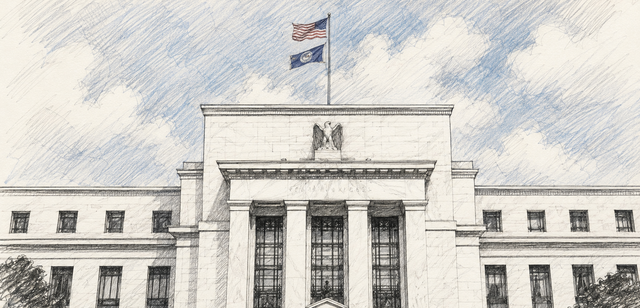


Key takeaways
- US interest rates are likely to be kept on hold this year
- Warsh is no Trump lackey but he may agree with the president on policy rates
- Less forward guidance could lead to more bond market volatility
As Kevin Warsh takes the helm of the US Federal Reserve, he inherits a divided Federal Open Market Committee (FOMC), a president liable to publicly criticize and the spectre of rising inflation. He has also suggested that things need to change at the Fed. These challenges make it hard to predict what course he will plot.
Below, Liam O’Donnell, who leads the Artemis fixed income team’s strategy on macro and rates, grapples with some of the key issues facing bond markets as they digest the impact of the Fed’s leadership transition.
Will the Fed cut rates this year?
Not likely. The FOMC has a dual mandate – employment and inflation. There may be concerns around the quality of labour market hiring (it is heavily reliant on healthcare) and the impact of AI on jobs going forward. But until real signs of weakness emerge on the other side of the dual mandate (inflation), rate cuts are unlikely, in my view. US financial conditions haven’t tightened, economic activity looks robust and equity markets are close to all-time highs.
The market is not expecting rate cuts, either. At the time of writing, the market was pricing in that US interest rates would be held steady at 3.5-3.75% for the rest of this year and rise slightly into 20271.
This is a dramatic change in expectations compared to just a couple of months ago. Before the US launched strikes against Iran, a succession of rate cuts were priced in.
Will Warsh be Trump’s ‘sock puppet’?
His track record suggests he will try to chart an independent course.
The White House has claimed that AI could bring about a surge in productivity, lowering inflation, which would allow the FOMC to cut rates. Warsh’s own views might align with this argument but I think he will require progress on inflation before pushing for lower rates.
Some of his previous comments jar quite abruptly with the current fiscal policy trajectory of the Trump government, for example that quantitative easing (QE) involves “the misallocation of responsibility in our government”. However, I have been so disappointed by recent shifts from Treasury Secretary Scott Bessent (who now advocates a “grow our way out of debt” approach) that I am nervous about whether the Warsh we get as Fed chair will be the same man who has been so critical of government “irresponsibility”. I’m too cynical to believe there will not be at least some brand loyalty to the administration.
Will Warsh’s plan to reduce forward guidance lead to increased bond market upheaval?
Warsh wants to dismantle the ‘dot plot’ and encourage the FOMC to make policy decisions “in the room” – instead of signalling the direction of interest rates months in advance.
Although Warsh purportedly wants the Fed’s communications to become clearer and more transparent, having less forward guidance could lead to more volatility if short-term rates become more sensitive to economic data. Abrupt policy moves might even trigger rapid repricing.
Yet for active managers with the flexibility to take advantage of volatile market conditions and greater dispersion, this environment could create opportunities.
How will the Fed approach inflation data under Warsh?
Warsh said during his Senate confirmation hearing that the Fed is using “imperfect” measures of inflation. Instead, he thinks the FOMC should look at “trimmed averages” – a measure of core inflation that strips out extremes – to better understand the “underlying, generalised change in prices”.
As a corollary, the Fed would be less swayed by events such as the Iran war and oil price spikes. “What I’m most interested in is what’s the underlying inflation rate, not what’s the one-time change in prices because of a change in geopolitics or a change in beef,” he explained.
Are you adding inflation protection to your portfolio?
The Iran war's impact on energy and food supply chains will take time to work its way through the system. Sustained price increases are therefore inevitable for the next three-to-six months, in my view. This could have a knock-on impact on the cost of services and on wages.
In this environment, buying inflation protection makes a lot of sense – particularly in markets such as the US where inflation pricing hasn’t really moved (because the US does not depend on energy imports). In the Artemis Strategic Bond Fund, we added 10 and 30-year US Treasury Inflation-Protected Securities (TIPS) during March.
Notes and references
FOR PROFESSIONAL INVESTORS AND/OR QUALIFIED INVESTORS AND/OR FINANCIAL INTERMEDIARIES ONLY. NOT FOR USE WITH OR BY PRIVATE INVESTORS.
CAPITAL AT RISK. All financial investments involve taking risk and the value of your investment may go down as well as up. This means your investment is not guaranteed and you may not get back as much as you put in. Any income from the investment is also likely to vary and cannot be guaranteed.
This is a marketing communication. Before making any final investment decisions, and to understand the investment risks involved, refer to the fund prospectus (or in the case of investment trusts, Investor Disclosure Document and Articles of Association), available in English, and KIID/KID, available in English and in your local language depending on local country registration, available in the literature library.
Important information
The intention of Artemis’ ‘investment insights’ articles is to present objective news, information, data and guidance on finance topics drawn from a diverse collection of sources. Content is not intended to provide tax, legal, insurance or investment advice and should not be construed as an offer to sell, a solicitation of an offer to buy, or a recommendation for any security or investment by Artemis or any third-party. Potential investors should consider the need for independent financial advice. Any research or analysis has been procured by Artemis for its own use and may be acted on in that connection. The contents of articles are based on sources of information believed to be reliable; however, save to the extent required by applicable law or regulations, no guarantee, warranty or representation is given as to its accuracy or completeness. Any forward-looking statements are based on Artemis’ current opinions, expectations and projections. Articles are provided to you only incidentally, and any opinions expressed are subject to change without notice. The source for all data is Artemis, unless stated otherwise. The value of an investment, and any income from it, can fall as well as rise as a result of market and currency fluctuations and you may not get back the amount originally invested.